


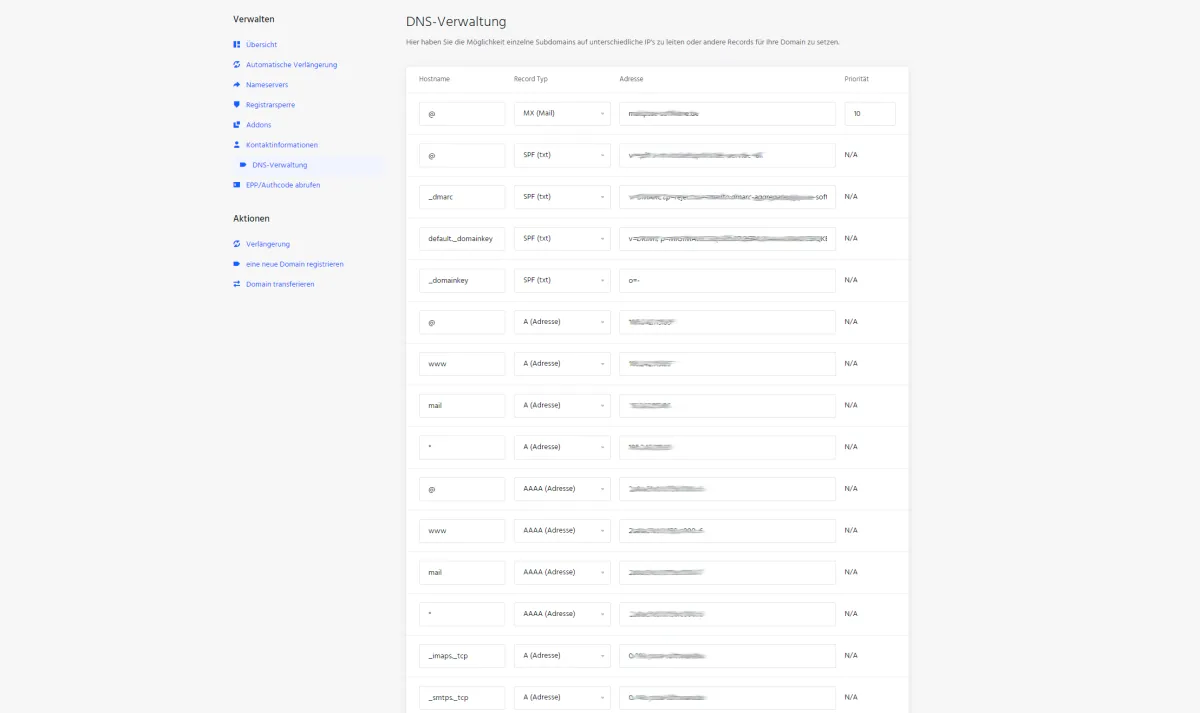
In the digital world, the management and maintenance of the Domain Name System (DNS) zone is one of the critical aspects that is often overlooked. A well-organised and tidy DNS zone is crucial for the security, efficiency and reliability of your online presence. Neglecting these administrative tasks can lead to serious security risks, including the potential for abuse by spambots and phishing sites. This article highlights the importance of maintaining your DNS zone and provides security recommendations to help avoid such risks.
What is a DNS zone?
The Domain Name System (DNS) is one of the fundamental technologies of the internet, functioning like a comprehensive address book. It translates user-friendly domain names (such as www.example.com) into the numerical IP addresses (e.g. 192.0.2.1) that computers use to identify and locate themselves on the internet. This conversion is necessary because people find it easier to remember names than sequences of numbers, whilst the Internet and networks rely on IP addresses to identify devices and resources and enable communication between them.
How does DNS work?
When you visit a website in your browser, a DNS lookup process takes place in the background:
- Request: The process begins when you enter a domain name into your web browser, for example. Your computer then sends a request to the DNS server.
- Resolver: The DNS resolver, usually provided by your internet service provider (ISP), receives the request and begins searching for the corresponding IP address. If the resolver does not already have this information in its cache, it forwards the request.
- Root server: The request first reaches one of the 13 global root name servers. These servers contain information about all top-level domains (TLDs) such as .com, .net, .org and so on. The root server responds with the address of a TLD server responsible for the requested domain.
- TLD server: The TLD server manages information about the domains registered under its TLD. It responds with the address of the authoritative name server for the requested domain.
- Authoritative name server: This server holds precise information about the requested domain and can return the corresponding IP address. This server is usually configured and managed by the domain owner.
- Response: The resolver receives the IP address from the authoritative name server and forwards it back to your computer, which can then establish a connection to the destination IP address (i.e. the desired website).
Why is DNS important?
- User-friendliness: DNS makes the internet accessible and user-friendly by allowing websites to be accessed via domain names rather than IP addresses.
- Scalability: It enables the growth of the internet by providing a simple mapping between names and addresses.
- Flexibility: Organisations can change their web server addresses without users even noticing, as the change is made in the DNS and the website’s name remains the same.
Challenges and security
Although DNS is crucial to the functioning of the Internet, it also poses security risks. DNS spoofing or poisoning can result in users being unwittingly redirected to fake websites, which facilitates phishing and the spread of malware. To prevent such attacks, additional security measures such as DNSSEC (DNS Security Extensions) have been developed to ensure the authenticity and integrity of DNS responses.
Overall, DNS is an indispensable part of the internet, enabling the fast and efficient use of digital resources, whilst challenges relating to security and data protection remain.
Why a well-organised DNS zone is important
An overlooked or neglected DNS zone can lead to a range of problems, including security vulnerabilities, poor performance and the possibility that your domain could be misused for malicious activities. A well-organised DNS helps to minimise these risks by ensuring that all records are up to date and accurate.
Case study: The hidden risk of old DNS records
A customer who had a domain with Host A decided to test a droplet with a provider and created a DNS zone for this purpose (test.domain.de). Once the test was complete, the customer deleted the droplet but forgot to remove the corresponding DNS record. Later, the vacated Droplet was booked by spambots or phishing sites, which inserted a catch-all into their web server configuration. This meant that any domain pointing to the Droplet automatically published its contents - a serious security risk.
The result? The customer’s domain was penalised by search engines such as Google and Bing, as it was unintentionally used to spread malware and phishing. This incident highlights the importance of regularly checking DNS zones and removing old or no longer required entries.
Security recommendations for a tidy DNS zone
- Regular checks: Carry out regular audits of your DNS zones to ensure that all records are correct and up to date. Remove any records that are no longer needed to prevent potential misuse.
- Use automation: Consider whether you can use tools to automate DNS management, which can help identify and remove orphaned entries.
- Raise security awareness: Ensure that everyone with access to DNS management is aware of the risks posed by out-of-date records and understands the importance of keeping the DNS zone clean.
- Access controls: Implement strict access controls for managing your DNS settings to ensure that only authorised personnel can make changes.
- Monitoring and alerts: Use monitoring tools that track changes to your DNS configuration and alert you to potential security risks.
Conclusion
A clean and well-managed DNS zone is crucial for the security and integrity of your online presence. By regularly reviewing and cleaning up old or redundant DNS records, you can prevent your domain from being misused for malicious purposes. This not only contributes to security,