


Email is an important communication tool in everyday business life. To ensure that emails really do come from the intended sender and have not been sent by a hacker or spammer, there are technologies known as DKIM and DMARC. We would like to introduce these to you in this blog post.
DKIM (DomainKeys Identified Mail)
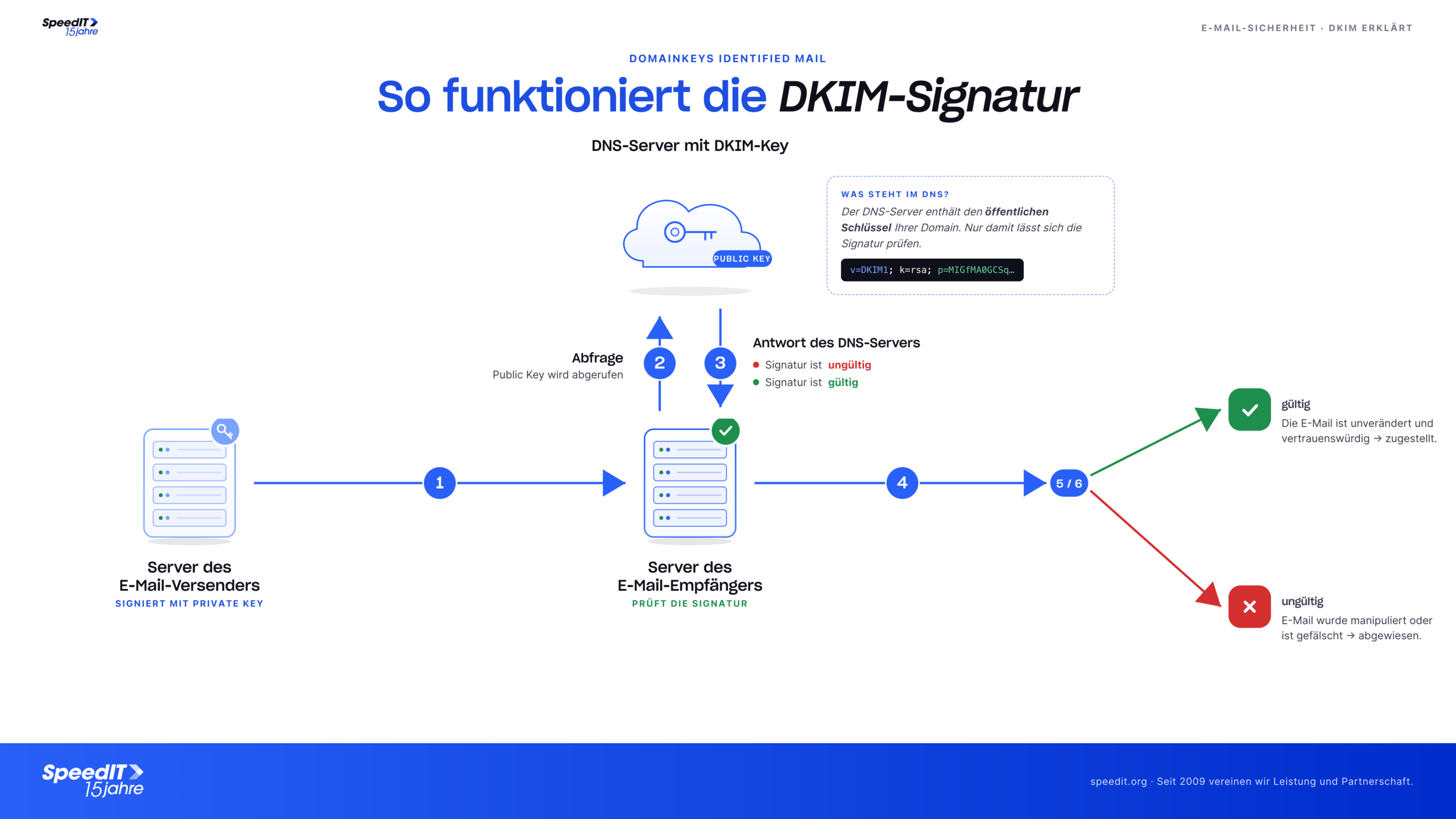
DKIM is a method for authenticating emails that enables the recipient to verify that an email actually originates from the specified domain.
In the DKIM process, a digital signature is attached to the email, which can be verified using a public key. The sender must therefore first generate a private key and register it with the mail server from which they wish to send emails.
When a recipient receives an email, they first check the signature on the email. To do this, they use the public key registered for the specified domain. They then calculate a hash value from the email and compare it with the value specified in the signature header. If these match, the recipient can be certain that the email actually originates from the specified domain.
DKIM therefore enables the recipient to verify that an email actually originates from the specified sender and has not been sent by a hacker or spammer. It protects against phishing attacks and enhances the credibility of email senders.
DMARC (Domain-based Message Authentication, Reporting & Conformance)
DMARC is a method for authenticating emails that builds on other authentication methods such as DKIM (DomainKeys Identified Mail) and SPF (Sender Policy Framework). It enables the recipient to detect and block potential forgeries of email sender addresses.
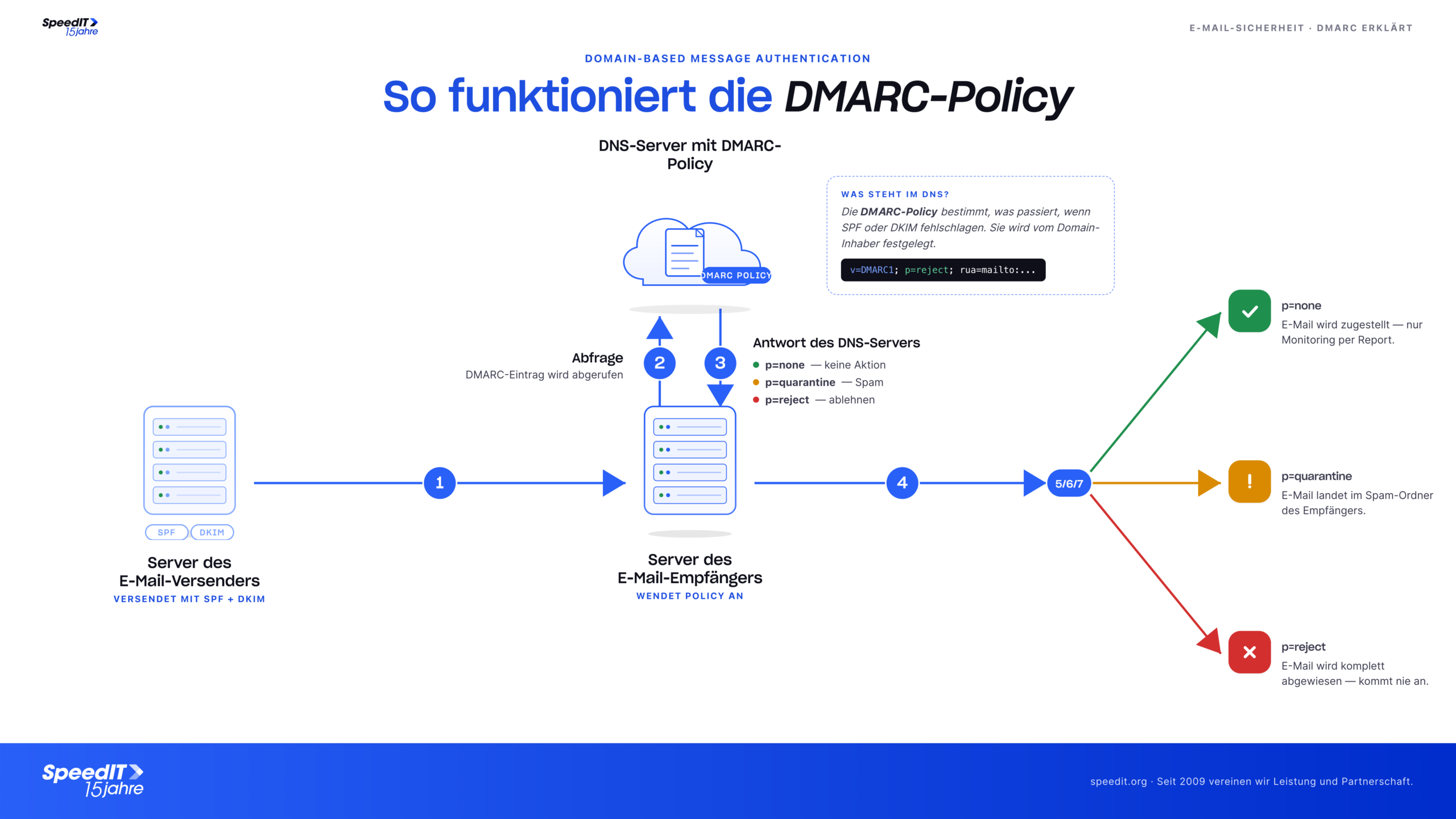
The DMARC process uses a policy created by the email sender and published in the DNS (Domain Name System). This policy contains instructions on how to handle unauthenticated emails. For example, the sender can specify that emails which cannot be authenticated by both DKIM and SPF should be blocked.
When a recipient receives an email, they first check whether a DMARC policy exists for the sender’s domain. They then check the email for DKIM and SPF authentication. If the email is successfully authenticated, it is delivered. However, if the email cannot be authenticated, it is handled in accordance with the instructions in the DMARC policy (e.g. blocked or marked as spam).
Benefits of DKIM and DMARC
By using DKIM and DMARC, organisations can ensure that their emails actually originate from them and have not been sent by a hacker or spammer. This not only protects against phishing attacks, but also enhances the credibility of email senders and improves email deliverability.
So, if you want to improve your email security and ensure your emails are recognised as trustworthy, we recommend implementing DKIM and DMARC. There are various tools and providers available to assist with the set-up.
Here are external generators for DKIM & DMARC records, as well as a wizard that can be used to create all the necessary records:
DKIM Generator:
https://dmarcly.com/tools/dkim-record-generator
(We always recommend generating DKIM records on your own systems or via your email hosting provider, as this involves the creation of a security-critical private key!)
DMARC Generator:
https://dmarcly.com/tools/dmarc-generator
SPF-DKIM-DMARC Wizard:
https://dmarcly.com/tools/spf-dkim-dmarc-wizard/#intro
Email security through trust & reports
In summary, implementing DKIM and DMARC provides an additional layer of security for email sending. It enables the recipient to verify that the email actually originates from the intended sender and has not been sent by a hacker or spammer. It protects against phishing attacks and improves the credibility of email senders and the deliverability of emails. A further advantage of DMARC is that it enables organisations to receive reports on unauthenticated emails. These reports contain information on the IP addresses from which these emails were sent and the sender addresses used. In this way, organisations can quickly identify when their email addresses are being misused and take appropriate action.
Overall, DKIM and DMARC offer an effective method of enhancing email security and preventing phishing attacks. It is therefore advisable to implement these technologies, particularly for organisations that send confidential information via email. There are many providers offering this service and assisting companies with implementation. We, for example, offer you the option to activate DKIM records directly in the hosting control panel. You can find instructions on how to do this in our knowledge base: Configuring and activating DKIM
Conclusion
In summary, the implementation of DKIM and DMARC is an important measure for enhancing email security. It enables the recipient to verify that an email actually originates from the intended sender and has not been sent by a hacker or spammer. This protects against phishing attacks and improves the credibility of email senders as well as the deliverability of emails. DMARC also offers the option of receiving reports on unauthenticated emails, thereby enabling the rapid detection and prevention of misuse of email addresses. Although implementing DKIM and DMARC requires some technical knowledge and can sometimes lead to incompatibilities, it is particularly advisable for organisations that send confidential information via email to implement these technologies.